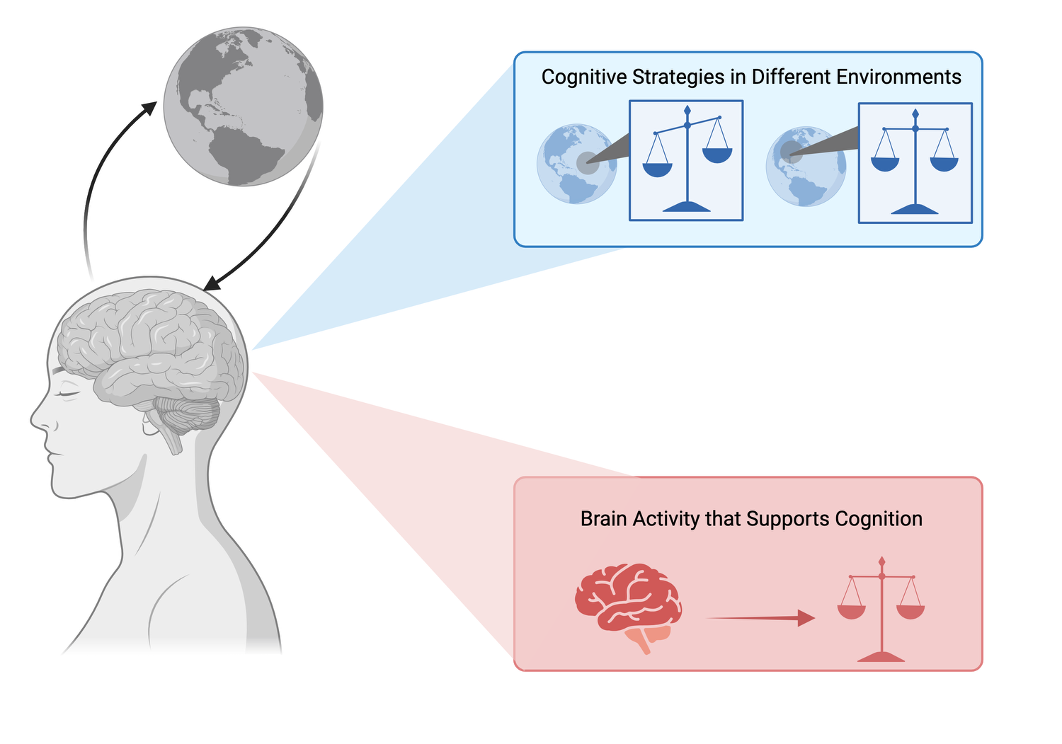
To study this, we build decision-making games with “hidden” features that change how a participant should behave. We then use mathematical modeling to determine what strategies humans use to change their decision-making in different environments.
Crowdsourced, online video games let us observe many people behaving in complex, dynamic worlds, surfacing the diversity of cognitive strategies that a single laboratory task would miss. Coupling this work with Bayesian inference and alternative behavioral strategies allows us to simulate robust game structures and quantify human behavior.